There is a quiet crisis unfolding inside enterprise security operations centres around the world. It is not a crisis of visibility. It is not a crisis of data. It is not even, technically, a crisis of detection. It is a crisis of cognition.
Over the past decade, the cybersecurity industry has made extraordinary investments in making threats visible faster. Alerts fire within seconds. Dashboards surface anomalies in real time. Machine learning models rank threats by severity before an analyst has had their first coffee. By almost every early-stage metric, the industry has delivered.
And yet dwell times persist. Breaches still take days, sometimes weeks, to contain. Ransomware groups execute full attack chains in under 30 minutes. Nation-state actors move laterally through cloud infrastructure with a fluency that leaves forensic investigators scrambling. The response gap is not closing. In some sectors, it is widening.
The reason is uncomfortable to acknowledge: most enterprises believe they bought AI-powered security. What they actually bought was AI-enhanced paperwork, sophisticated, well-marketed, and genuinely useful, but still entirely dependent on human beings to perform the hardest cognitive work.
The real bottleneck in modern cyber defence is no longer detection. It is investigation. And almost no one is talking about it.
How AI Is Actually Being Used in Security Operations Today
Let us be precise about what the industry has built, because the progress is real and it deserves honest recognition.
Modern security operations centres now leverage AI across a wide range of functions. Alert triage systems reduce noise by filtering thousands of events down to hundreds of meaningful ones. Log enrichment tools automatically attach context, geolocation, threat intelligence, asset criticality, to raw events so analysts do not have to hunt for it. Event correlation engines identify relationships between signals that would take humans hours to connect manually. Natural-language summary tools translate technical telemetry into readable incident briefs. Analyst copilots surface relevant playbooks, suggest next steps, and query data across multiple tooling environments through conversational interfaces.
This is genuinely valuable work. It has reduced analyst fatigue. It has accelerated the early stages of incident handling. It has made skilled analysts more productive and less burdened by routine cognitive load.
But let us be equally precise about what all of this represents: support for human investigation. Not replacement of it.
Call this what it is, AI-assisted security. It helps humans investigate. It does not investigate.
The AI-Assisted Illusion
Here is the workflow that plays out in thousands of security operations centres every day:
- A detection fires.
- AI enriches the alert with context.
- AI generates a natural-language summary.
- A human analyst opens five to twelve tools.
- The human forms a working theory about what may have happened.
- The human manually validates evidence across endpoint, identity, cloud, and network telemetry.
- The human decides what action is appropriate.
- A static playbook executes a predetermined response.
Steps one through three are fast. Often measured in seconds. Genuinely impressive. Steps four through eight are where time disappears. Where skilled analysts disappear into a labyrinth of tooling. Where expertise becomes the bottleneck. Where the organisational debt of manual investigation accumulates silently, incident after incident.
The AI handled the paperwork. The human handled the thinking.
Detection became real-time. Investigation stayed manual.
MTTD improved. MTTR remained trapped in the past.
This is the AI-assisted illusion: the belief that because the front end of the security workflow became intelligent, the entire workflow became intelligent. It did not. AI was layered onto a fundamentally unchanged cognitive model, one that still requires a skilled human to generate hypotheses, test assumptions, reason across domains, determine root cause, design responses, and own accountability for the conclusion.
In an era where attackers are not waiting, this is not a sustainable architecture.
Why AI-Assisted Security Hits a Structural Ceiling
The limitation of AI-assisted security is not a technology problem. It is a design philosophy problem. AI-assisted systems were built with a specific operating assumption: that AI is a tool, and humans are the investigators. Within that model, AI is optimised to make human investigation faster, not to replace human investigation with machine reasoning.
The consequences are predictable and observable. AI-assisted systems can summarise logs, but cannot challenge the assumptions embedded in how those logs were generated. They can enrich indicators of compromise, but cannot infer attacker intent from behavioural patterns across an entire kill chain. They can rank alert severity, but cannot reconstruct a multi-stage campaign from fragmented evidence spread across three cloud providers and a hybrid identity environment. They can trigger playbooks, but cannot adapt those playbooks when new evidence contradicts the initial hypothesis. They can recommend an action, but cannot own accountability for a decision that affects production infrastructure.
AI-assisted systems made the first 20% of the security workflow nearly instant. The remaining 80%, the reasoning layer, still depends entirely on human cognition.
This was a reasonable trade-off in 2018. It is an existential liability in 2026. Because the threat landscape has changed in a way that breaks the original equation. Attackers are no longer trying only to evade detection. They are racing your investigation clock.
Automated attack frameworks execute credential theft, lateral movement, privilege escalation, and data staging faster than most human analysts can triage the initial alert. AI-generated phishing campaigns evolve in real time based on response signals. Ransomware operators have industrialised their kill chains to the point where a fully manual investigation workflow almost guarantees they complete their objective before containment begins.
The asymmetry is stark: attackers operate at machine speed. Defenders still investigate at human speed. AI-assisted security did not close that gap. It decorated it.
The Shift Enterprises Actually Need: AI-Driven Investigation
The answer is not more copilots. The answer is not better dashboards. The answer is not a larger, better-trained analyst team, though all of those things have their place. The answer is a fundamental rearchitecting of where AI sits in the security workflow.
Not at the edges. Not in the enrichment layer. Not in the summary generation. At the core. At the reasoning layer. At the point where the hardest cognitive work happens and where the greatest time is lost.
AI-assisted gives you data. AI-driven gives you intelligence.
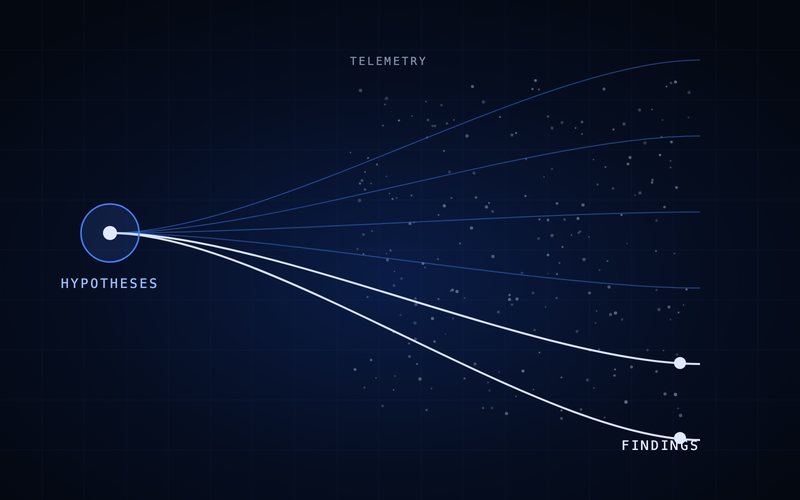
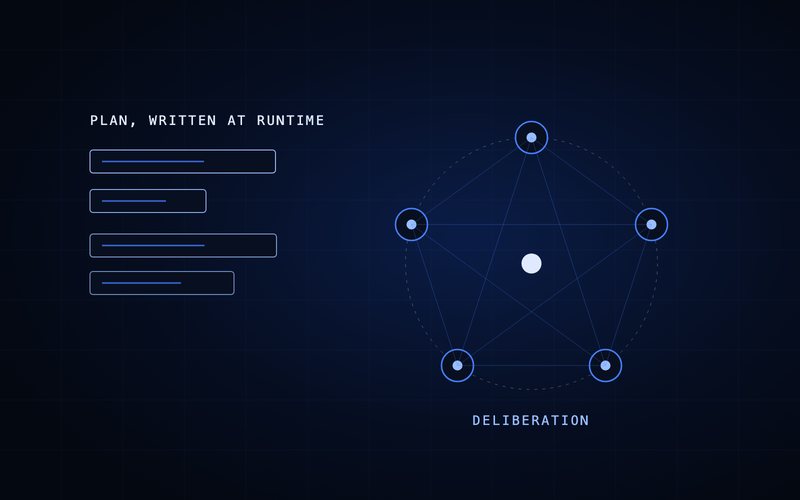
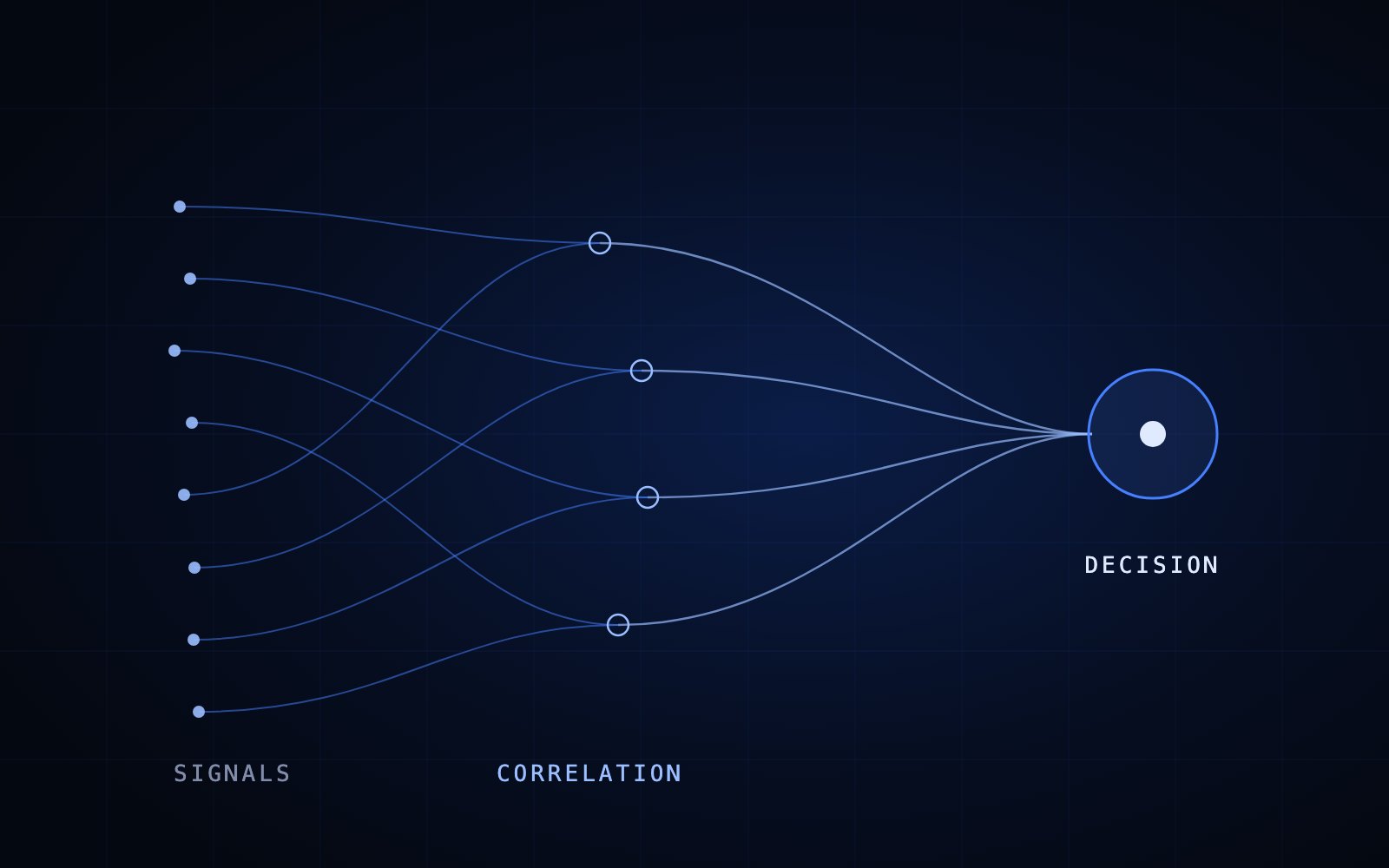
What does AI-driven security investigation actually look like in practice? It generates competing hypotheses about what may have happened, simultaneously, at machine speed, rather than waiting for an analyst to form a single working theory and then test it sequentially. It tests those hypotheses continuously against live evidence as new telemetry arrives, updating confidence scores dynamically rather than locking into a conclusion prematurely. It correlates evidence across endpoint, identity, cloud, network, and behavioural layers without requiring an analyst to manually pivot between five separate platforms. It determines root cause by reasoning backward from observed impact through the sequence of attacker actions, rather than analysing events in isolation. It designs contextual responses that account for the specific environment, the specific blast radius, and the specific risk tolerance of the organisation, rather than triggering a generic playbook that may not fit the evidence.
Most importantly, it learns. From prior incidents. From environmental baselines. From attacker behavioural patterns that evolve over time. It becomes more accurate, not just faster.
This is not a future capability. This is the category that is beginning to emerge, and the distance between organisations that adopt it and those that do not will be measured in breach outcomes.
Why This Conversation Belongs in the Boardroom
For too long, the distinction between AI-assisted and AI-driven has been treated as a technical debate for security architects. It is not. It is a board-level strategic decision with material consequences.
Consider the operational calculus: every hour of investigation time translates to additional dwell time, additional lateral movement, and additional blast radius. Every security event that takes twelve hours to contain instead of twelve minutes represents a compounding risk exposure. Every analyst burned out by the cognitive overload of manual investigation represents a talent drain in a market where cybersecurity professionals are already scarce and expensive.
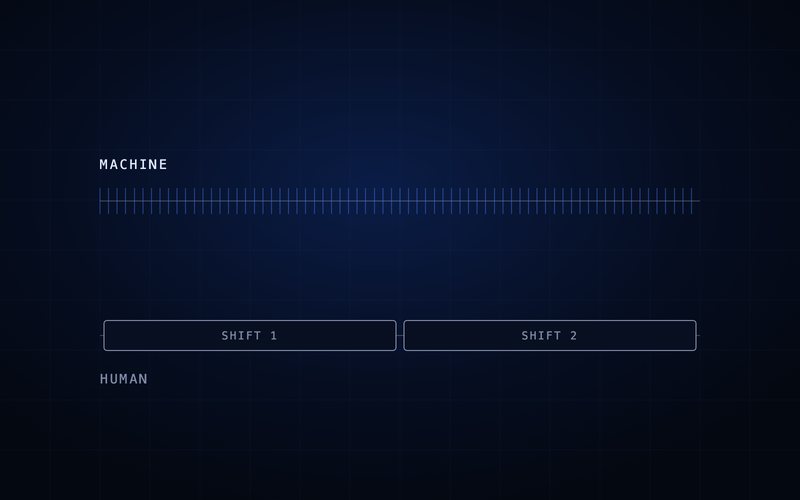
AI-driven investigation changes this calculus fundamentally. Reduced dwell time, from days to minutes, limits the damage window that attackers can exploit. Faster containment means ransomware groups, data exfiltrators, and nation-state actors are evicted from environments before they complete their objectives. Lower analyst burnout means organisations can retain skilled talent and deploy it toward higher-order strategic work rather than exhausting it on investigation treadmills. Reduced dependence on scarce expertise means security quality no longer varies dramatically based on whether the best analyst is on shift. Stronger cyber resilience means the organisation can absorb the reality of AI-speed attacks without being structurally outpaced.
This is not a feature comparison between security products. It is an operating model shift, one with direct implications for risk posture, operational cost, talent strategy, and cyber insurance positioning.
The organisations that make this shift proactively will be measurably harder to compromise. Those that do not will continue investing in increasingly sophisticated alert management while remaining structurally exposed at the layer that actually determines outcomes.
How Spharaka Networks Is Closing the Investigation Gap
Spharaka Networks was built around a conviction that most of the market has not yet internalised: that AI should not merely assist security operations, it should autonomously execute the core investigative reasoning that determines whether a defence succeeds or fails.
This conviction is reflected in the design of Spharaka Sphere™, an AI-native autonomous cyber defence platform engineered from first principles to close the investigation gap rather than optimise around it.
While much of the market continues to add AI features onto legacy tooling, enriching alerts that still require human investigation, summarising evidence that still requires human synthesis, Spharaka Sphere™ was architected to replace the manual reasoning layer with autonomous machine intelligence.
In practice, this means Spharaka Sphere™ conducts autonomous investigation workflows that generate, test, and refine hypotheses without waiting for human direction. It applies hypothesis-led threat reasoning to move from raw telemetry to confident conclusions in minutes rather than hours. It uses confidence-based decisioning to dynamically weight evidence and adapt its analytical conclusions as new data arrives, mirroring how elite analysts think, not how static rule engines operate. It performs cross-stack evidence correlation across endpoint, identity, cloud, and network domains simultaneously, eliminating the tool-switching latency that consumes human investigation time. It delivers real-time conclusions, not summaries for human review, but reasoned determinations ready for action. Its dynamic SOAR pipelines are built on live evidence rather than predetermined logic, meaning response actions are designed for the specific security event, not for a generic threat category. Machine-speed containment and remediation capabilities mean the organisation can act on AI-derived conclusions without waiting for the human sign-off cycles that have historically defined the response lag. And throughout, human analysts remain in control, empowered by AI reasoning rather than replaced by it, able to redirect, override, and escalate based on organisational judgement while the machine handles the investigative heavy lifting.
The goal is not to help analysts click faster. It is to help enterprises defend faster.
When attackers operate autonomously, defenders need systems that think autonomously, too. Spharaka Sphere™ represents the operational reality that the industry has been promising for years but has rarely delivered: AI that does not merely observe threats, but reasons about them.
The Decisive Advantage
The cybersecurity industry has spent a decade building better front ends for a fundamentally unchanged cognitive model. The results have been valuable and real, and they deserve acknowledgment. But they have not solved the problem that actually determines breach outcomes.
The future of cybersecurity will not be won by better dashboards.
It will be won by faster reasoning.
Enterprises that continue to invest exclusively in detection speed and alert quality are optimising the wrong variable. They are making the diagnosis faster while leaving the treatment timeline unchanged. In an environment where attackers have already internalised the power of autonomous AI systems and are deploying them operationally, this is not a strategic gap, it is a strategic vulnerability.
Enterprises that automate detection alone remain exposed.
Those that automate investigation gain asymmetric advantage.
The investigation gap is real. It is widening. And it is now, finally, addressable. The question for every CISO, CTO, and board member is a simple one: how long can your organisation afford to leave the most consequential layer of cyber defence dependent on human speed?
About the Author
Sai Praveen Reddy is Director of Security Product Management at Spharaka Networks™. Sai specialises in OT Security, security strategy, and innovation, with a strong focus on building advanced security solutions that help organisations defend against evolving cyber threats.
Ready to Close the Investigation Gap?
Spharaka Sphere™ replaces manual investigation with autonomous, hypothesis-led reasoning, moving from raw telemetry to confident conclusions in minutes, not hours.