On the morning of April 19, 2026, Vercel, the $9.3 billion cloud deployment platform that underpins millions of web applications and serves as the primary steward of Next.js, a framework downloaded six million times a week, confirmed what security researchers had feared for months. The company had been breached. Not through a zero-day exploit. Not through a brute-force attack on its infrastructure. Not through a vulnerable server left open to the internet.
The intrusion began with an AI tool.
A Vercel employee had been using Context.ai, a third-party AI platform that builds enterprise agents trained on company-specific knowledge and workflows. Context.ai connected to Google Workspace through an OAuth application, the standard handshake protocol that powers nearly every modern SaaS integration. When Context.ai was itself compromised, the attacker inherited everything that OAuth token granted: access to the employee's Google Workspace account, and from there, a pathway into Vercel's internal systems.
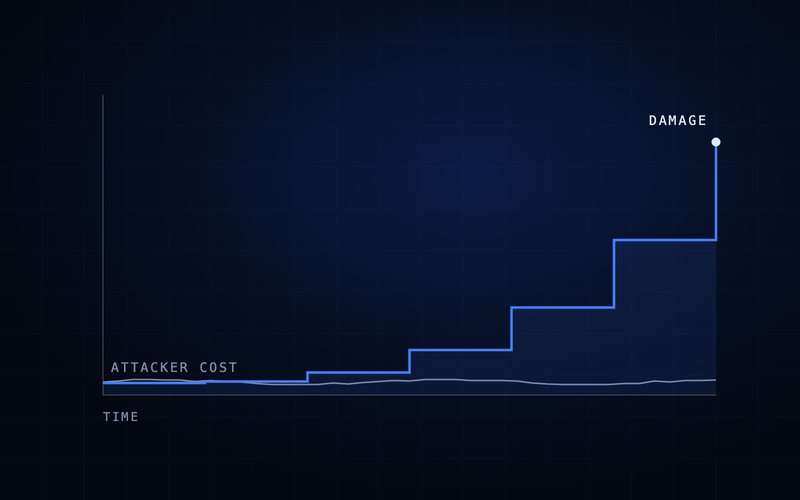
The attacker moved with what Vercel CEO Guillermo Rauch described as extraordinary operational velocity and a detailed understanding of the company's architecture, speed and precision that Rauch noted appeared significantly accelerated by AI itself. The intruder escalated from a compromised workspace account to Vercel environments, where they enumerated environment variables that had not been marked as sensitive and therefore were not encrypted at rest. From there, the blast radius expanded further. A threat actor, claiming affiliation with the ShinyHunters group, appeared on a hacking forum offering access keys, source code, database data, employee account access, internal deployment credentials, NPM tokens, and GitHub tokens, allegedly demanding $2 million.
As of this writing, Vercel has engaged prominent cybersecurity firms. Law enforcement has been notified. The company has confirmed that Next.js, Turbopack, and its open-source projects remain safe. But the incident has sent shockwaves through the developer ecosystem, the cloud infrastructure market, and the boardrooms of every enterprise that has, willingly or unknowingly, handed OAuth permissions to AI tools touching its most critical systems.
The Vercel breach is not an isolated event. It is the opening chapter of a crisis that the cybersecurity industry has been warning about, and that enterprises have been sleepwalking into, for more than a year.
The Silent Explosion of the AI Attack Surface
The numbers are stark. AI-related attacks have increased nearly 490 percent year over year, according to recent SaaS and AI research firm. A poll by one of the prominent cyber media found that 48 percent of cybersecurity professionals now rank agentic AI and autonomous systems as the top attack vector heading into 2026, ahead of deepfake threats, board-level cyber risk, and passwordless adoption. Another report on State of AI Agent Security 2026, found that 80.9 percent of technical teams have pushed past planning into active testing or production deployment of AI agents. Only 14.4 percent of those agents went live with full security and IT approval.
These are not projections. These are operational realities.
Every enterprise is now running, or has employees individually running, AI agents that connect to email, calendars, document repositories, code repositories, CRM platforms, messaging systems, cloud infrastructure consoles, and financial tools. Each of these agents represents a non-human identity with its own permissions, credentials, and access paths. Each is a new node in the enterprise's identity fabric. Each is, in security terms, a privileged insider operating at machine speed.
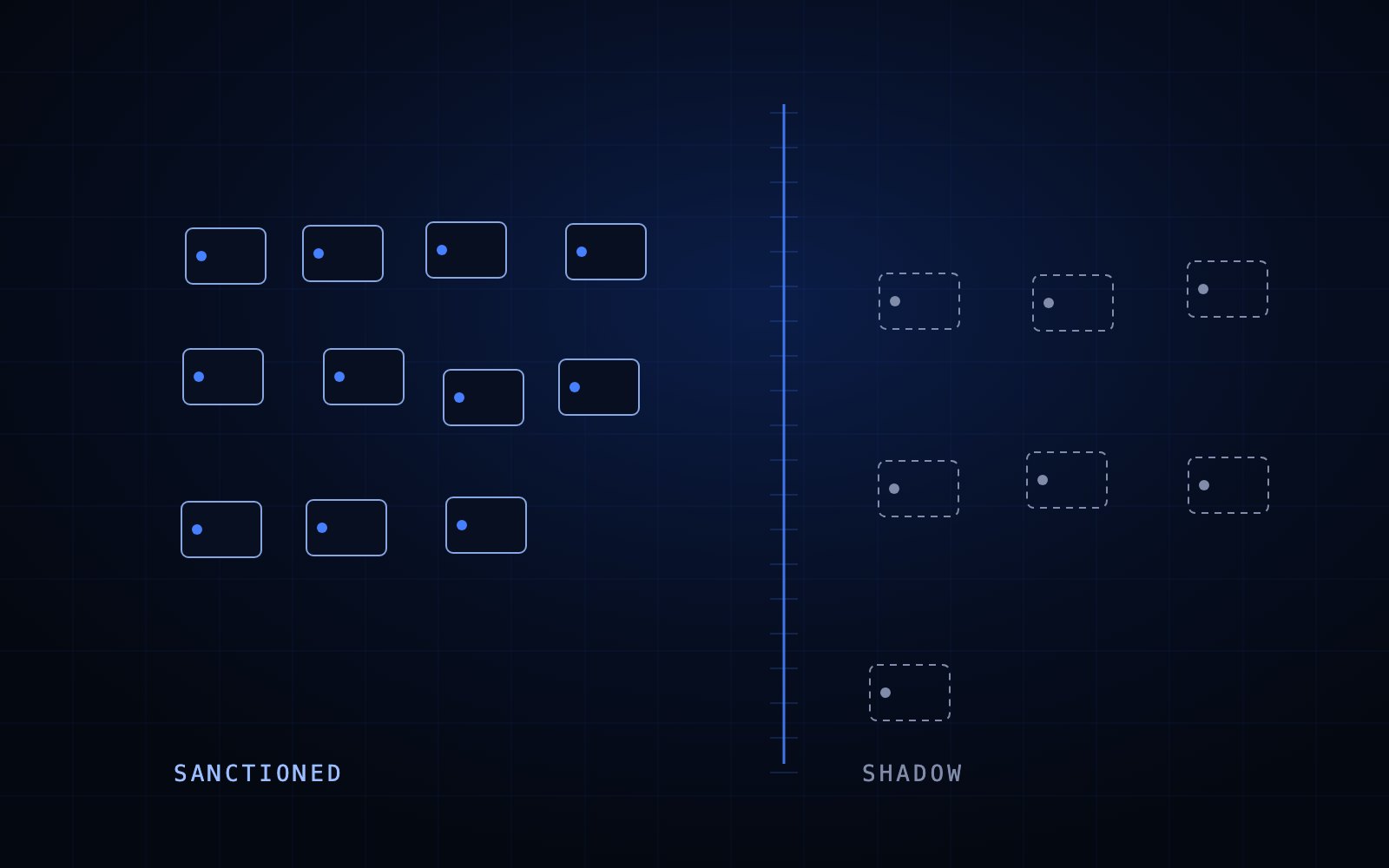
And most organizations have no inventory of how many are operating, what they can access, or who approved them.
Industry research and surveys cited in this article, 2025 to 2026.
Why the Vercel Incident Changes the Conversation
The anatomy of the Vercel breach deserves close examination, because it illustrates a new attack model that every CISO must now internalize.
The old model of enterprise compromise followed a predictable chain: exploit a vulnerability, breach a server, steal a database. Defenders built architectures around this model, firewalls, endpoint detection, patch management, network segmentation.
The Vercel attack chain looks nothing like that.
It began with a trusted third-party AI application. Context.ai was not rogue software installed by a careless employee against policy. It was a legitimate enterprise AI platform, the kind that organizations across industries are actively adopting. The employee who used it was doing exactly what the industry has been encouraging: leveraging AI to increase productivity.
The attacker did not need to write an exploit. They did not need to find a CVE. They needed to compromise the AI tool itself, and then walk through the doors that OAuth had already opened. From Context.ai's compromised OAuth application, the attacker pivoted into Google Workspace. From Google Workspace, into Vercel's internal environments. From environment variables, into secrets, tokens, and deployment pipelines.
This is the new kill chain: compromise a trusted SaaS integration, inherit its permissions, move through the identity fabric, access secrets, and threaten the software supply chain. No malware required. The weapon was trust itself.
And the terrifying truth is that this same pattern is replicable across virtually every enterprise on earth, because virtually every enterprise has granted similar OAuth permissions to similar tools often without a second thought.
Sequence as publicly described for the Vercel incident.
OAuth Permissions: The Threat Nobody Sees
OAuth was designed to solve a real problem: allowing users to grant third-party applications limited access to their accounts without sharing passwords. In practice, it has become something far more dangerous, a mechanism for creating persistent, broadly scoped, rarely audited access tokens that live indefinitely in enterprise environments.
When an employee connects an AI writing assistant, a meeting summarizer, a coding copilot, or a workflow automation tool to their Google Workspace or Microsoft 365 account, the OAuth consent screen often requests permissions that most users neither read nor understand. Full mailbox access. Read and write access to all files. Calendar access. Contact access. In some cases, workspace admin scopes. Repository access. Messaging permissions across platforms.
The user clicks "Allow." The token is granted. And from that moment, a persistent access pathway exists between the third-party application and the enterprise's most sensitive data, one that bypasses firewalls, evades endpoint detection, and often survives password rotations.
The 2025 annual study of breach costs found that 86 percent of organizations have no inventory or visibility into where their AI is connected or what data is exposed. Ninety-seven percent lack proper AI access controls. Each unaudited OAuth token is, in effect, a standing invitation, one that any attacker who compromises the third-party application can exploit.
The Vercel incident proved that this is not theoretical. The OAuth application identifier that Vercel published in its security advisory, the one that enabled the breach, is now an indicator of compromise that Google Workspace administrators across the world are being urged to check. But how many organizations have the tooling, the processes, or even the awareness to conduct that check?
The answer, for most, is: they do not.
AI Agents as Insider Threat Multipliers
Consider what a modern AI agent is designed to do. It reads emails. It accesses documents. It inspects calendars. It summarizes meetings. It generates and reviews code. It triggers workflows. It manages repositories. It browses internal knowledge bases. It acts autonomously on behalf of the user who authorized it.
Now consider what happens when that agent is compromised.
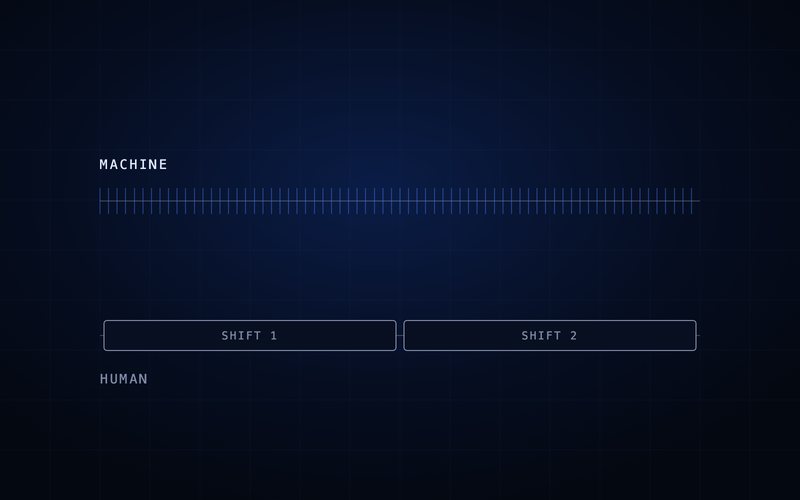
The attacker does not gain access to a single system. They gain access to everything the agent can touch, which, in many cases, is everything the employee can touch. But unlike a compromised human account, a compromised AI agent operates at machine speed. It can enumerate permissions, exfiltrate data, and move laterally across systems in seconds. It does not take coffee breaks. It does not trigger the behavioural anomalies that security teams are trained to detect in human users.
The OWASP Top 10 for Agentic Applications, published in late 2025, formalized this attack surface. The ten risks include goal hijacking, tool misuse, identity and privilege abuse, agentic supply chain vulnerabilities, unexpected code execution, memory poisoning, insecure inter-agent communication, cascading failures, human-agent trust exploitation, and rogue agents. Most of these have no analog in traditional application security. The existing playbook does not apply.
Making matters worse, 25.5 percent of deployed AI agents can create and task other agents, according to the Gravitee report. Each spawned agent compounds the attack surface. Each inherits permissions. Each operates without consistent security oversight. More than half of all deployed agents today operate without any security monitoring or logging whatsoever.
This is not shadow IT. This is shadow identity, machine identities proliferating across enterprise environments at a pace that governance frameworks were never designed to manage.
The Coming Wave of AI-Native Supply Chain Breaches
The Vercel breach exposes a dimension of supply chain risk that goes far beyond the software supply chain attacks the industry has focused on since SolarWinds. Every AI tool connected to an enterprise system is a supplier, not just of code, but of identity, data access, decision-making capability, and automation.
When Context.ai was compromised, it did not inject malicious code into Vercel's software. It provided the attacker with an identity pathway, a set of inherited trust permissions that allowed movement through systems that had no reason to suspect anything was wrong. The requests coming through that OAuth token looked legitimate because, from the system's perspective, they were legitimate.
This is the identity supply chain. It runs parallel to the code supply chain, and it is arguably more dangerous because it is almost entirely unmonitored. Organizations that have invested millions in software composition analysis, dependency scanning, and build pipeline integrity have often invested nothing in understanding which third-party applications hold persistent OAuth tokens to their most sensitive systems.
The attack surface is compounding. The Coalition for Secure AI published a comprehensive MCP Security whitepaper in January 2026 mapping 12 core threat categories and nearly 40 distinct threats related to the Model Context Protocol, the framework that allows AI agents to interact with external data sources and tools. A month later, Microsoft's Azure DevOps MCP package was found to have a missing authentication layer, carrying a CVSS score of 9.1. A major enterprise vendor shipping production infrastructure with authentication as an afterthought is not a one-off failure. It is a systemic indicator of where the industry's defaults still sit.
Why CISOs Are Losing Visibility
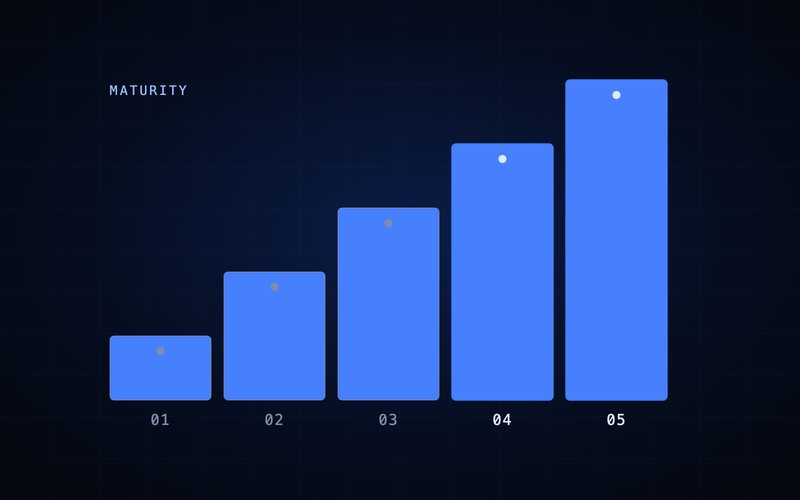
The gap between executive confidence and operational reality is perhaps the most dangerous finding in the current research. According to 2026 survey data, 82 percent of executives feel confident that their existing policies protect against unauthorized agent actions. Yet over half of deployed agents operate without security oversight. Only 21 percent of executives have complete visibility into agent permissions, tool usage, or data access patterns.
This confidence gap exists because most organizations have attempted to extend their existing application security frameworks to cover AI agents. The problem is fundamental: AI agents are not applications. They make autonomous decisions. They call external tools. They can be manipulated through their inputs in ways that traditional software cannot. A firewall does not stop a prompt injection. An API gateway does not prevent an over-permissioned agent from exfiltrating data through a legitimate tool call. An endpoint detection platform does not flag an OAuth token being used exactly as it was designed to be used, by the wrong entity.
The security operations centre built for human-speed, signature-based, perimeter-defined threats is not equipped to defend against machine-speed, identity-driven, trust-based attacks that move through the SaaS layer without ever touching the network in a way that traditional sensors can observe.
2026 survey data cited in this article.
What Boards and CEOs Must Do Now
The Vercel breach should be treated as a board-level event, not because it affected one company, but because it demonstrated a class of attack that applies to nearly every enterprise.
Immediate action items are straightforward to articulate and difficult to execute. Every organization needs a complete inventory of all AI tools and agents operating within its environment, including those adopted by individual employees without IT approval. Every OAuth grant must be catalogued, risk-scored, and reviewed against the principle of least privilege. Environment variables, API keys, tokens, and credentials must be audited for proper classification and encryption. Incident response plans must be updated to account for identity-chain compromises that originate in third-party SaaS applications.
Beyond tactical remediation, boards must recognize that AI agent governance is now a fiduciary responsibility. The question is no longer whether employees are using AI tools. They are. The question is whether the organization has visibility into the access those tools have been granted, the data they can reach, and the blast radius if any one of them is compromised.
Organizations that fail to answer these questions are not merely accepting risk. They are accepting risk they cannot measure, which is, by definition, unmanageable.
Why Autonomous Defence Platforms Matter Now
The structural challenge is clear: the speed and complexity of AI-driven attacks have outpaced the capacity of human-driven security operations. When an attacker can move from a compromised OAuth token to full environment access in minutes using AI to accelerate reconnaissance, enumeration, and exploitation, the defender cannot afford to wait for a human analyst to triage an alert, investigate a log, and escalate a ticket.
This reality is driving the emergence of a new category of cybersecurity platform: autonomous defence systems built to operate at machine speed against machine-speed threats. These platforms are designed not merely to detect anomalies but to understand identity graphs, monitor SaaS trust relationships, detect AI-agent behavioural deviations, and execute response actions autonomously, before human analysts are even aware an incident is underway.
Spharaka Networks, a Hyderabad-based deep-tech cybersecurity company, represents this emerging class. Its flagship platform, Spharaka Sphere, is built on AuraXP, a multi-agent AI architecture comprising over 40 specialized autonomous agents, each responsible for a distinct layer of the security lifecycle. The platform is designed to unify detection, investigation, and response across endpoints, networks, cloud environments, and SaaS applications within a single intelligent layer, correlating signals and executing defensive actions in real time. For organizations operating in high-risk environments, financial services, telecommunications, healthcare, critical infrastructure, the value proposition is direct: reduce the gap between detection and response from hours to seconds, and do so across the fragmented, identity-driven, SaaS-interconnected attack surfaces that define the modern enterprise.
The principle is simple and increasingly unavoidable: in a world where attackers deploy AI agents, defenders need autonomous AI agents too. The question for CISOs is not whether to adopt autonomous defence capabilities, but how quickly they can operationalize them before the next identity-chain compromise reaches their environment.
The Final Warning: Convenience Has Become the Vulnerability
The Vercel breach did not exploit a zero-day vulnerability. It did not require sophisticated malware. It did not depend on a careless employee clicking a phishing link. It exploited something far more fundamental: the trust that enterprises routinely extend to productivity tools, AI applications, and SaaS integrations that promise to make work faster, smarter, and more efficient.
That trust, codified in OAuth tokens, embedded in API keys, extended through workspace permissions, has become the primary attack surface of the modern enterprise. Every "Allow" click is a policy decision. Every connected AI agent is an identity perimeter. Every third-party integration is a supply chain dependency.
The industry spent decades hardening servers, patching software, and building firewalls. It now faces a threat that does not traverse those defences because it does not need to. It walks through the front door, carrying credentials that the organization itself provided.
The enterprises that survive the next wave of breaches will be those that recognized this shift early enough to act, that built inventories of their AI integrations, enforced least-privilege on every OAuth grant, deployed autonomous detection and response capabilities, and treated AI agent governance with the same rigour they apply to human access management.
The enterprises that do not will learn the lesson the hard way.
The next major breach may not come through malware or zero-days. It may arrive politely, through an AI agent your company already trusted.
About the Author
Vishnu Nair is a Founding Member and Director of Growth and Partnerships at Spharaka Networks™. To learn more or request a platform demonstration: spharaka.com
Is Your Enterprise Monitoring Its AI Agent Attack Surface?
Spharaka Sphere™ detects compromised OAuth tokens, anomalous AI agent behavior, and identity-chain attacks in real time. Discover how autonomous defence can protect against the threats your current tools cannot see.