Somewhere in a boardroom right now, a CISO is answering the question: "Are we secure?"
The honest answer is: we don't know. And that uncertainty is no longer a gap in tooling. It's a structural failure in thinking.
The threat has changed categories. Not versions. Not iterations. Categories.
What used to be a persistent, patient adversary is now a learning system. It doesn't sleep. It doesn't get tired. It doesn't need a junior analyst to craft a convincing phishing email. It writes one in milliseconds, tailored to your tone, your context, your calendar. And when your defences block it, the attack updates itself and tries again, smarter.
The game is not harder. The game is different. And most organisations are still playing the old one.
Cybersecurity Didn't Fail. It Became Obsolete.
For years, there was a rhythm. Alerts came in. Analysts investigated. Teams responded. Imperfect, but manageable. There was a sense of control, earned, defended, real.
That rhythm is gone.
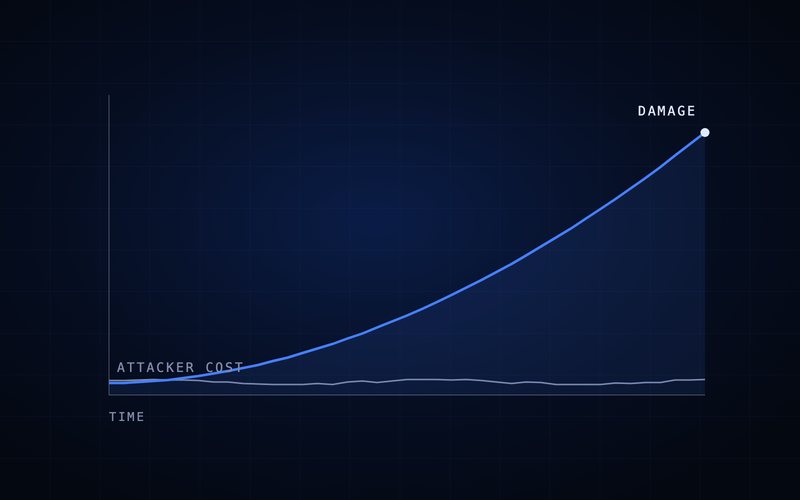
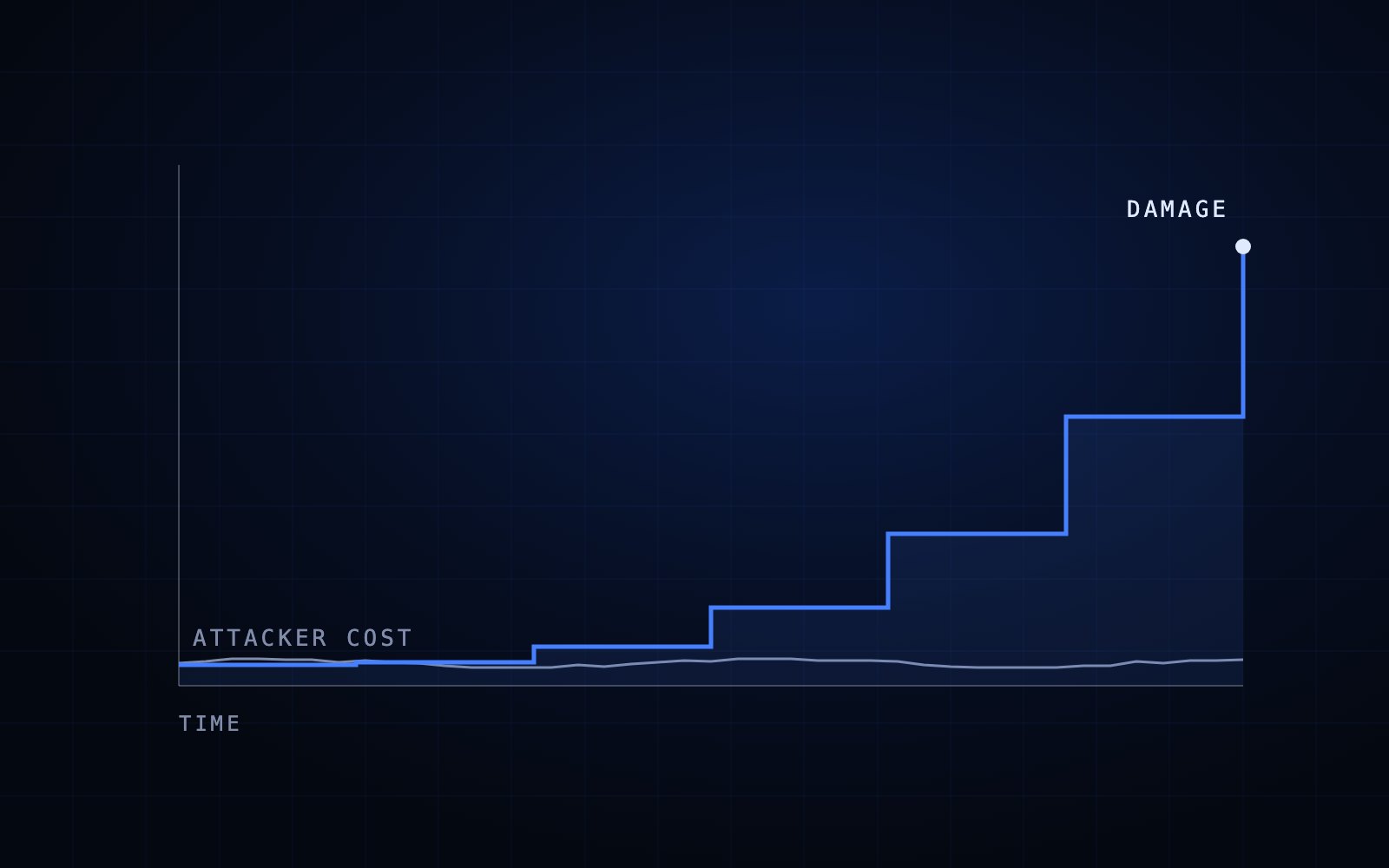
Malware no longer sits still. It evolves, rewrites itself, and adapts in real time based on the specific defences it encounters. Every blocked intrusion isn't a win, it's a data point the attacker feeds back into the next attempt. Every failed payload becomes a training sample. The adversary is getting smarter with every interaction your defences have with it.
When every failed attack makes the next one more precise, the concept of "blocking" is no longer a strategy. It's a delay.
You are not facing a more sophisticated human operator. You are facing a machine that learns from you while you sleep.
Headcount Cannot Beat Machine Speed
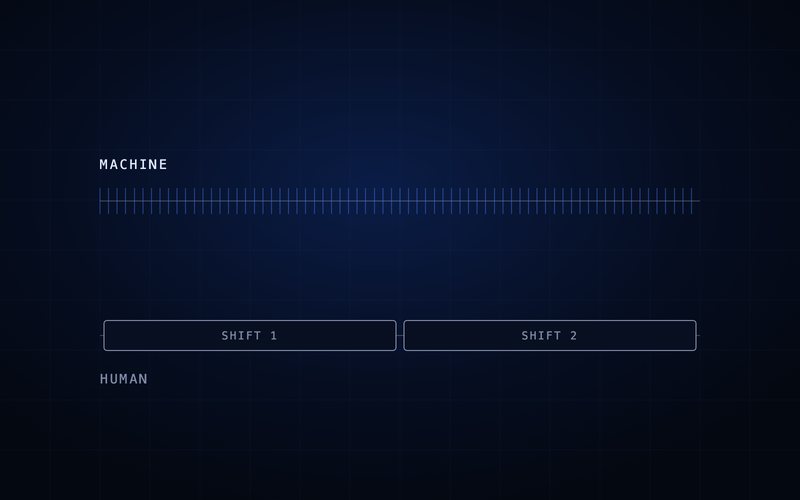
The security operations model was built in an era of human-speed attacks. It assumed there was time, time to detect, time to escalate, time to investigate, time to respond. That assumption is now a liability.
Attacks today move in milliseconds. By the time an alert surfaces, gets triaged, gets escalated, and gets acted upon, the breach is no longer a threat. It's a fact.
Your team is not failing because they lack skill. They're failing because they're operating at human speed inside a machine-speed conflict. The SOC was built for a slower enemy. That enemy retired.
What replaced it doesn't need reconnaissance weeks. It doesn't need to study your infrastructure manually. AI can map your environment, identify your weakest surface, craft a personalised attack vector, and launch, all before your morning standup.
The Uncomfortable Truth
Most security teams today are not protecting their organisations. They are documenting what happened to them. There is a difference. One is defence. The other is forensics with a delay.
AI vs AI Is Already Here
Stop waiting for the AI threat wave to arrive. It's not coming. It's here. It arrived quietly, without an announcement, and it has been refining itself ever since.
Attackers are already using AI to generate polymorphic malware that mutates mid-deployment, rewriting its own signature before your detection engine can recognise it. They are using large language models to run spear-phishing at industrial scale, not dozens, not thousands, millions of hyper-personalised messages, each one engineered to exploit the specific psychology of a specific human, at a cost approaching zero.
But here is what nobody in your last threat briefing mentioned: the models doing this are not ChatGPT. They are not Gemini. They are not Claude. They are Dark LLMs, WormGPT, FraudGPT, GhostGPT, purpose-trained on criminal datasets, sold on underground forums for less than a Netflix subscription, built with no guardrails, no refusals, no ethical constraints of any kind. Not jailbroken. Not misused. Purpose-built for offence, from day one.
$50
Cost of access to a purpose-built Dark LLM on underground forums, less than a Netflix subscription.
Millions
Hyper-personalised phishing messages a single attacker can generate at near-zero marginal cost.
Zero
Guardrails, refusals, or ethical constraints in WormGPT, FraudGPT, and GhostGPT.
The expertise required to attack you has been democratised. Dark LLMs are the great equaliser. And they are equalising in the wrong direction.
The noise in your SOC is not random. It's engineered. The volume of false positives your team drowns in every day is not a side effect, it is the attack. It's designed to exhaust attention so that the real incursion passes unseen in the flood.
The signal is hidden in the noise. And the noise is being generated on purpose.
Meanwhile, most defences are still pattern-matching against yesterday's threat signatures. Still waiting for a human to make the call. Still asking whether an anomaly is worth investigating. In the time it takes to ask that question, the answer has already changed.
In the AI Era, Defence Must Think. Not Just Detect. Defence Must Act.
The response to an intelligent, autonomous attack cannot be a manual, reactive process. Physics won't allow it. You cannot build a human-in-the-loop system fast enough to match a machine that learns between attempts.
The answer is not more analysts. It is not better dashboards. It is not another layer of point tools adding to the alert noise. The answer is autonomous defence: systems that observe, reason, decide, and act without waiting for a human to process a ticket.
Not automation. Autonomy. There is a critical difference.
Automation follows rules. Autonomy makes decisions.
Automation reacts to known conditions. Autonomy adapts to novel ones.
Automation scales what you already know how to do. Autonomy does what you couldn't do at all.
Autonomous defence is not optional. It is the only architecturally sound response to an autonomous attack.
When an AI-driven attack can study your defences and adapt in real time, the only viable counter is a defence that does exactly the same, continuously sensing, reasoning, and responding at the same speed and intelligence as the threat itself. Anything slower is not security. It is surrender on a delay.
Spharaka Networks™: Built for the Conflict Everyone Else Is Still Pretending Is Theoretical
We started Spharaka Networks™ with a single conviction: the security industry was building faster horses when the road had already changed.
Every incumbent platform was designed around the assumption that a human sits at the centre of the decision loop. That assumption was reasonable when attacks moved at human speed. It is catastrophic now.
Spharaka Sphere™ is built on a different architecture entirely. At its core is AuraXP™, a multi-agent AI system of 40+ specialised agents, each responsible for a distinct layer of the security lifecycle. Together, they form something that operates less like software and more like a living immune system.
Spharaka Sphere™, AuraXP™ Architecture
Continuous Environmental Observation. Across endpoints, networks, identities, and applications, simultaneously. Not periodically. Continuously.
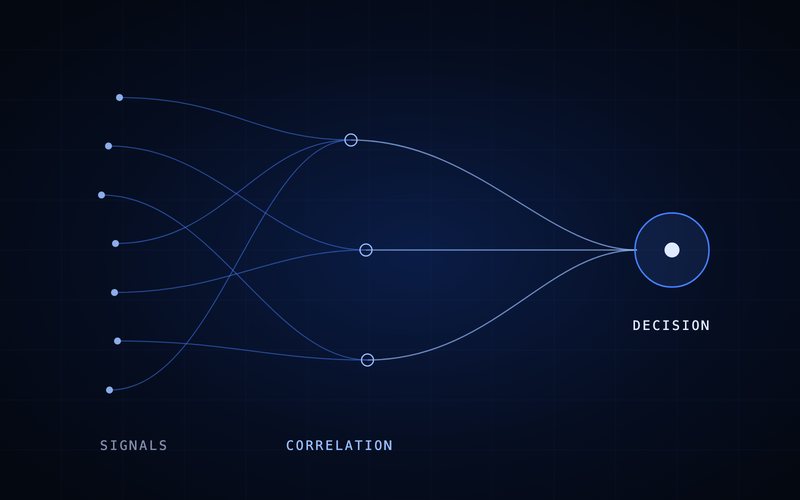
Contextual Correlation. Across signals that no human analyst team could connect manually, in real time, not in post-incident review.
Autonomous Containment. Isolating compromised systems, blocking lateral movement, neutralising threats before escalation, not after discovery.
Continuous Learning. Every interaction, every blocked attempt, every resolved incident makes the system sharper. The defence improves with every attack.
Humans don't disappear in this model. They are elevated. They move from operators buried under alert queues to orchestrators setting policy, reviewing outcomes, and making the high-judgment calls that require human context.
AI handles speed and scale. Humans handle direction and accountability. That is not a compromise. That is the correct architecture.
We are not building a better SIEM. We are building a new category. Autonomous Cyber Defence, where the system doesn't assist your security team. It is your security capability.
The Window to Get Ahead of This Is Closing
Every month you operate with a legacy security model against an AI-native adversary, the gap widens. The attackers are not waiting. They are not in a pilot programme. They are in production, improving, deploying.
The organisations that move now are not just buying better security. They are building an asymmetric advantage, a defence that gets harder to beat the more it is attacked. That compounds. The organisations that wait are building technical debt in their security posture that will be brutally expensive to close later.
The question is not whether you will adopt autonomous defence. The question is whether you will do it before or after the breach that forces you to. Most will wait for the breach. The few who don't will define what security looks like for the next decade.
The advantage in the AI vs AI era doesn't go to the strongest. It goes to the fastest learner. Your adversary already started learning. The question is whether your defence has too.
About the Author
Rajeev Raj is the Co-founder and CEO of Spharaka Networks™. With nearly two decades of experience in cybersecurity, he is focused on redefining how organisations defend against AI-driven, automated attacks. Connect on LinkedIn.
Defend at Machine Speed
See how Spharaka Sphere™ delivers autonomous cyber defence built for the AI vs AI era, not retrofitted to it.