The security industry has spent a decade building playbooks, exhaustive libraries of predefined response scripts designed to cover every threat scenario. The problem is that attackers don't follow the script. Dynamic playbook creation and execution is the capability that finally closes that gap.
The Fundamental Problem With Pre-Written Playbooks
Security Orchestration, Automation, and Response platforms, SOAR, promised to solve incident response at scale. Write a playbook once, automate it forever. The idea was compelling. The reality has been more complicated.
SOAR playbooks are written by humans, before incidents occur, for threat scenarios the team has already encountered or anticipated. That design has three inherent failure modes that no amount of maintenance can fully resolve:
Static SOAR Playbooks
AuraXP™ Dynamic Playbooks
Across the industry, security investigation and remediation remain overwhelmingly manual, because static playbooks require humans to intervene wherever the scripts run out.
What Dynamic Playbook Creation Actually Means
When AuraXP™ detects a threat, it doesn't search a playbook library. It doesn't pattern-match against predefined scenarios. It reasons. Using the SAGE AI Model, a large language model purpose-trained on security operations, AuraXP assembles a response plan from scratch by evaluating every relevant dimension of the incident simultaneously:
Threat Taxonomy
What attack technique is being used? What MITRE ATT&CK tactic does it map to? What are the attacker's likely next objectives?
Asset Context
Which specific assets are affected? What is their criticality? What downstream dependencies would be disrupted by isolation?
Identity Profile
What is the risk history of the involved user or service account? Does this match their behavioural baseline?
Regulatory Context
Which data classifications are at risk? What compliance frameworks apply, GDPR, DPDP, HIPAA, PCI DSS?
Available Tooling
What security controls can be invoked? Firewall rules, EDR isolation, IAM token revocation, ITSM ticketing, what is available?
Organisational Memory
How have similar incidents been handled before? What worked? What produced false positive containment?
The key insight: A dynamic playbook isn't a worse version of a static one. It's a categorically superior instrument, because it knows the specific patient, not just the general disease. The response plan for a ransomware execution on a Tier-1 financial core banking server is fundamentally different from the same technique on a developer workstation. Static playbooks cannot make that distinction. AuraXP™ makes it as a matter of course.
How AuraXP™ Builds and Executes a Playbook: Step by Step
The dynamic playbook lifecycle inside AuraXP™ is a closed-loop process that runs continuously from detection through containment, with full adaptability at each stage.
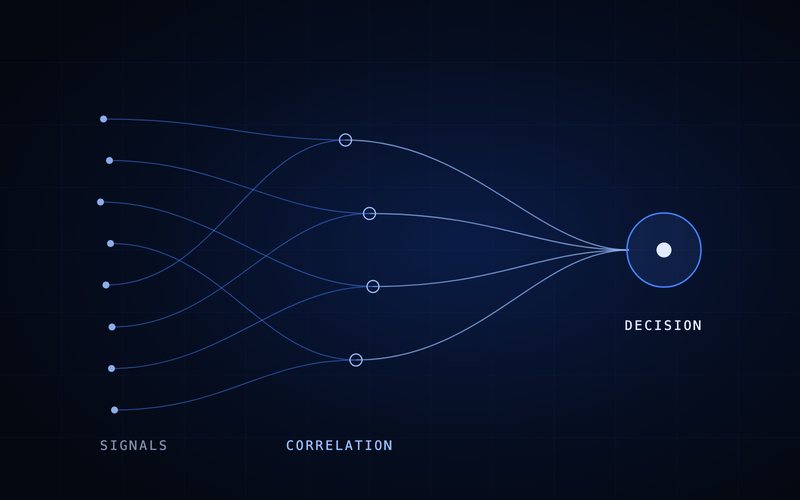
Multi-Signal Detection & Correlation
AuraXP's 40+ specialized AI agents surface threat signals from across the environment, endpoint behaviour, network anomalies, identity access events, cloud workload activity. The SAGE AI Model correlates these signals into a unified incident understanding, confirming threat presence and establishing the attack's current phase in the kill chain.
Contextual Reasoning & Objective Assessment
AuraXP™ assesses the full incident context: what assets are involved and how critical they are, what the attacker's likely objectives are at this stage of the kill chain, what the blast radius of different response actions would be, and what compliance obligations apply to the data and systems at risk.
Dynamic Playbook Assembly
The SAGE AI Model assembles the response plan: a sequenced set of actions, each with a clear objective, an expected outcome, a fallback condition if the expected outcome is not achieved, and a rationale that can be reviewed by human analysts. The playbook is not retrieved, it is composed.
Autonomous Execution with Closed-Loop Feedback
AuraXP™ executes the playbook actions across the relevant security tools, isolating endpoints, blocking IP addresses, revoking access tokens, updating firewall rules, quarantining suspicious files. After each action AuraXP™ monitors the outcome and compares it to the expected result.
Real-Time Adaptation
As the response unfolds, new information may emerge, additional compromised hosts are discovered, the attacker pivots to a new technique, or a containment action reveals previously unknown lateral movement. AuraXP™ incorporates each new signal and updates the playbook accordingly.
Post-Incident Learning & Memory Update
When the incident is resolved, AuraXP™ stores the full response record in Sphere's organisational memory. This record improves future playbook generation for similar incidents, making each dynamic playbook built on richer, more precise organisational context than the one before it.
A Dynamic Playbook in Action: Live Scenario
Abstract description only goes so far. Here is what dynamic playbook creation looks like for a real incident type, a credential compromise with lateral movement detected across an enterprise environment.
Live Scenario · AuraXP™ Dynamic Playbook
Compromised Service Account with Active Lateral Movement, Financial Services Environment
UEBA agent flags anomalous authentication pattern, service account accessing 12 internal systems in 90 seconds, outside normal operational hours. Concurrent network agent detects unusual SMB traffic between same source and target hosts.
AuraXP SAGE AI Model correlates signals, lateral movement via compromised service account. Confidence: High.
T+0 seconds
SAGE AI Model assesses context, service account has broad access including 3 Tier-1 systems (core banking, settlement engine, customer data store). Regulatory flag raised: personal and financial data in scope. Attack phase: lateral movement, pre-exfiltration. No active data transfer yet detected.
T+3 seconds
Playbook assembled dynamically: (1) Revoke service account tokens immediately. (2) Isolate the 4 endpoints where anomalous authentication succeeded. (3) Preserve forensic memory snapshots before isolation. (4) Alert SOC team with full attack narrative. (5) Trigger GDPR/RBI breach assessment workflow. (6) Scan peer systems for signs of the same technique propagating.
Note: Playbook does NOT include hard shutdown of Tier-1 systems, asset criticality reasoning determines controlled containment is proportionate.
T+5 seconds
Service account tokens revoked. Four endpoints isolated at network layer. Memory snapshots captured. SOC alert generated with complete attack timeline, MITRE ATT&CK mapping (T1078, Valid Accounts, T1021.002, Remote Services: SMB/Windows Admin Shares), and recommended next steps.
T+8 - T+31 seconds
Post-isolation scan reveals a fifth endpoint also showing similar authentication pattern, not in original alert scope. AuraXP™ updates incident model, extends isolation to fifth host, adds it to forensic queue. Playbook extended dynamically without human direction.
T+34 seconds
Lateral movement contained. Tier-1 systems fully protected and operational. SOC team receives complete incident package, attack timeline, affected assets, containment actions taken, forensic evidence locations, regulatory assessment, recommended remediation steps.
Equivalent static SOAR response estimated: 45-90 minutes with analyst involvement at each decision gate.
T+47 seconds
Static SOAR vs. AuraXP™ Dynamic Playbooks: Side by Side
| Dimension | Static SOAR | AuraXP™ Dynamic |
|---|---|---|
| Creation time | Weeks to months per scenario | Milliseconds, generated at detection |
| Coverage of novel threats | Zero, no playbook exists until one is written | Universal, reasoning handles any scenario |
| Asset criticality awareness | Only if explicitly coded into the playbook | Native, integrated into every response decision |
| Adapts mid-execution | No, executes the script regardless | Yes, reassesses and updates after every action |
| Maintenance required | Ongoing, every change requires manual updates | None, learns autonomously from every incident |
| Compliance awareness | Only if compliance logic is scripted in advance | Built into every playbook, regulatory context is native |
| Explainability | Executes, no reasoning is exposed | Every action justified with SAGE AI Model-generated rationale |
| Time to value | Months of playbook development | Day 1, operational from first deployment |
| Human effort required | High, build, test, maintain, approve per incident type | Minimal, humans review, govern, and handle escalations |
Autonomy With Control: Human Oversight Built In
The natural question when any autonomous response capability is introduced is: what happens when the AI gets it wrong? It is the right question, and AuraXP™'s design addresses it directly.
Dynamic playbook execution in Spharaka Sphere™ operates through configurable autonomy levels. Organisations define, at granular levels, which categories of response action can execute fully autonomously and which require human confirmation before proceeding.
Graduated autonomy: This model is not just a safety mechanism, it is an adoption pathway. Organisations can start with AuraXP™ operating in "recommend and present" mode, where it builds the playbook and surfaces it to analysts for execution. As confidence builds, autonomy levels can be expanded category by category.
Every action AuraXP™ takes comes with full transparency. The SAGE AI Model generates a reasoning narrative for each playbook decision: what signal triggered the action, what outcome is expected, what the risk of not taking it is, and what the fallback will be. This makes autonomous responses fully auditable.
What Dynamic Playbooks Mean for Your Security Operations
Day 1
Operational response capability, no playbook development period required
Vs. months of SOAR playbook engineering
5x
Improvement in MTTR, response time compressed from hours to sub-60 seconds
Spharaka Sphere™ platform data
100%
Coverage of novel threats, dynamic reasoning means no incident type is outside response capability
Vs. zero coverage for unscripted scenarios in SOAR
Beyond the metrics, dynamic playbooks change the relationship between the security team and the platform. Instead of a library of scripts that needs constant gardening, analysts have a reasoning partner that handles routine response autonomously and brings genuinely complex decisions to human attention with full context already assembled.
For lean security teams: Dynamic playbook execution is particularly transformative for organisations that don't have the headcount to build and maintain an extensive SOAR library. AuraXP™ delivers the response sophistication of a mature SOAR deployment from Day 1, without any of the engineering investment, making enterprise-grade response automation accessible at every scale.
Frequently asked questions
Dynamic Playbooks & AuraXP™, high-intent questions about dynamic playbook creation, execution, and how AuraXP™ makes it work in practice.
What is a dynamic playbook in cybersecurity?
A dynamic playbook is an incident response plan generated in real time based on the specific context of a detected threat, rather than a pre-written static script authored before the incident occurred. Dynamic playbooks are assembled by AI systems like AuraXP™ that reason through the threat type, affected assets, environmental context, regulatory obligations, and available response tools to construct the optimal response workflow on the fly. Each dynamic playbook is unique to the incident it addresses, accounting for nuances that no static template could anticipate.
How does AuraXP™ create playbooks on the fly?
AuraXP™ uses the SAGE AI Model to reason through the full context of a detected incident, threat type, attack vector, affected assets, user risk profile, asset criticality, regulatory environment, available security tooling, and historical incident data, and assembles the optimal sequence of response actions in real time. Rather than querying a playbook library, AuraXP synthesizes a new response workflow from first principles for each unique threat, drawing on organisational memory and deep security domain knowledge to determine what should happen, in what order, and with what fallback conditions.
What is wrong with static SOAR playbooks?
Static SOAR playbooks have three fundamental problems. First, they must be written before the threat exists, unknown attack techniques have no coverage. Second, they require ongoing maintenance: every change in tools, infrastructure, or threat landscape requires manual playbook updates. Third, they are brittle, a static playbook written for one variant of a threat may fail entirely against a slightly different version.
Can AuraXP™ create playbooks for threats it has never seen before?
Yes. Because AuraXP™ generates playbooks through reasoning rather than template retrieval, it is not limited to threat types it has explicitly been programmed to handle. When a novel attack technique is detected, AuraXP's SAGE AI Model reasons from first principles, understanding the attacker's likely objectives, the affected attack surface, available containment options, and the risk of different response paths, and assembles a contextually appropriate response workflow even for threat types it has never encountered before.
How does dynamic playbook execution differ from SOAR automation?
SOAR automation executes pre-defined rule sequences when specific trigger conditions are met. Dynamic playbook execution by AuraXP™ is fundamentally different: it reasons about the current state of the incident at each step, adapts the response plan as new information emerges, and selects the next action based on the evolving incident context. If an isolation action produces unexpected results, AuraXP™ reassesses and adjusts. The response is a living, adaptive workflow rather than a static sequence.
What happens if a dynamic playbook action fails or produces unexpected results?
AuraXP™ monitors the outcome of every action it executes. If an action fails, produces unexpected results, or reveals new information about the incident, the SAGE AI Model reassesses the situation and adapts the remaining playbook accordingly. This closed-loop execution model means dynamic playbooks self-correct in real time. Every action taken, every outcome observed, and every adaptation made is logged with full reasoning transparency for auditability.
Does dynamic playbook creation replace the need for human security analysts?
No. AuraXP™'s dynamic playbook capability augments human analysts rather than replacing them. For well-understood, high-confidence incidents, playbook creation and execution can be fully autonomous, freeing analysts from routine response work. For complex or novel incidents, AuraXP generates the playbook and presents it to analysts with full reasoning, recommended actions, and risk assessments, so humans make informed decisions faster.
How does AuraXP™ ensure playbook actions comply with regulatory requirements?
AuraXP™'s playbook generation is compliance-aware by design. The SAGE AI Model incorporates knowledge of regulatory frameworks, GDPR, DPDP, HIPAA, ISO 27001, SOC 2, PCI DSS, and considers the regulatory implications of each potential response action before including it in a playbook. Compliance constraints are built into the reasoning process, not applied as an afterthought.
Can dynamic playbooks be reviewed and approved before execution?
Yes. AuraXP™ supports configurable autonomy levels. Organizations can configure which playbook categories execute fully autonomously, which require human review before execution begins, and which require approval at specific decision gates within execution. This graduated autonomy model lets organizations build confidence in dynamic playbook execution progressively over time.
About the Author
Vishnu Nair is a Founding Member and Director of Growth and Partnerships at Spharaka Networks™. Connect on LinkedIn.
See Dynamic Playbooks in Action
Discover how AuraXP™ inside Spharaka Sphere™ generates and executes incident response playbooks dynamically, in real time, for every unique threat.