The original UEBA promise
UEBA, User and Entity Behaviour Analytics, emerged to solve a real problem: signatures miss insiders. If a legitimate account exfiltrates data slowly and quietly, no indicator of compromise will fire. The proposed answer was statistical: model normal behaviour per user and entity, then alert on deviations from that baseline.
It worked in theory. It struggled in practice, and most security teams that deployed first-generation UEBA quietly stopped trusting its output within a year.
Why baseline-driven UEBA drowned in noise
A statistical baseline treats every deviation as a candidate anomaly. Real users deviate constantly: new project, new manager, new device, new geography, new working hours. Left unchecked, the result is an alert volume that quickly retrains analysts to ignore UEBA output altogether.
The deeper failure was contextual, not statistical. Baseline models did not know why a deviation had occurred, only that it had occurred.
- Alert storms during org changes: reorganisations, mergers, and role transfers make every affected user look anomalous at once
- Seasonality blindness: quarter-end finance activity, year-end access reviews, and festival-period support spikes all read as deviations
- No business context: a hundred file opens at 2am looks identical whether it comes from a release engineer or a data thief
- No memory of resolution: the same benign pattern re-alerts on every cycle because the model never absorbs the explanation
What AI-native UEBA changes
AI-native UEBA keeps the same behavioural signals but interprets them alongside context that a pure statistical model never had access to: identity and device posture, project participation, HR events, calendars, and known business cycles.
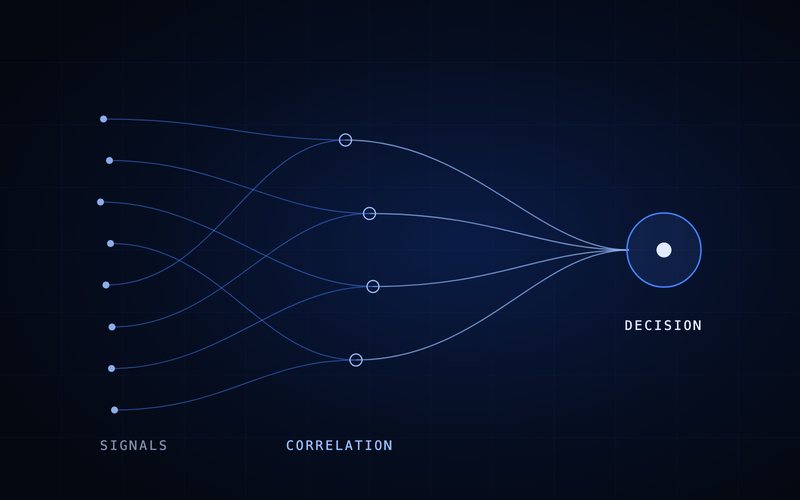
This context integration is what separates a reasoning system from a scoring system. A deviation that would have alerted a legacy UEBA is either explained away with evidence, or promoted with a stated reason.
- HR events: role changes, terminations, and leave status feed directly into how an anomaly is weighted
- Calendar and project context: a user working unusual hours during a documented go-live is treated differently from the same pattern with no calendar match
- Business cycle awareness: finance, payroll, and reporting cadences are modelled as expected variation, not noise to be flagged
- Persistent memory: once an explanation is accepted, the pattern is not re-flagged on the next tick
Reasoning over raw scores
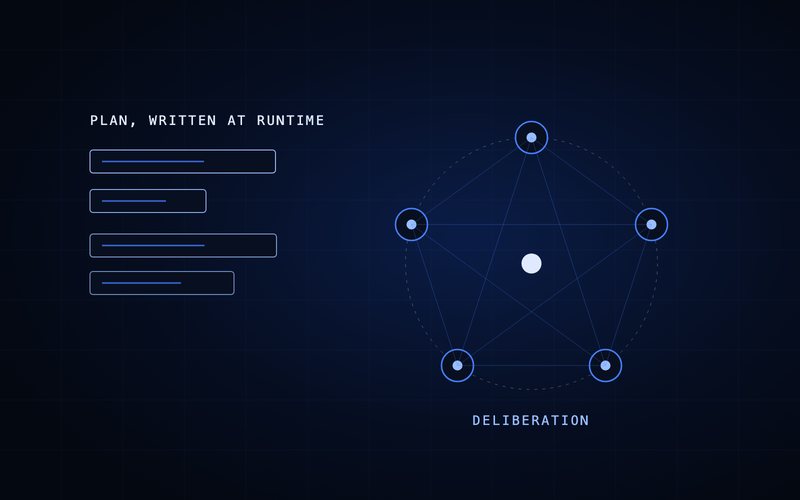
A risk score without a reason is not actionable. It forces the analyst to reconstruct the investigation the platform already had the data to perform. AI-native UEBA is judged on whether it produces a narrative: what changed, what corroborating signals exist, what the plausible benign and malicious explanations are, and what evidence favours each.
This shift matters for auditability as much as speed. A reasoned narrative can be reviewed and challenged. A raw anomaly score cannot.
Why UEBA is not a standalone product anymore
Insider threat detection is where baseline UEBA fails most visibly, because the attacker is authorised for most of what they do. The signal sits in the pattern of authorised actions over time, not in any single action. Detecting it requires stringing dozens of small deviations into one narrative, exactly the task an agentic reasoning layer is built for.
This is why UEBA no longer makes sense as a standalone console. Its value emerges when its output feeds the same reasoning layer that already handles investigation, threat hunting, and response, so an insider pattern and a compromised-credential pattern can be correlated rather than triaged separately.
Insider threat and privileged-user scenarios
Two scenario classes dominate real-world insider risk, and both demand context that pure statistics cannot supply.
- Departing employees: access patterns often shift in the weeks before resignation or termination; correlating HR status with data movement narrows this from thousands of users to a short, prioritised list
- Privileged-account misuse: admin and service accounts have wide legitimate reach, so monitoring must focus on the sequence and intent of privileged actions rather than any single command
- Compromised-but-authorised sessions: an attacker using stolen valid credentials behaves like an insider from the platform's point of view, which is why insider and external-compromise detection increasingly share the same models
- Third-party and contractor access: time-boxed, project-scoped access is easiest to reason about when calendar and project context is available
Data governance, privacy, and the DPDP obligation
Behavioural monitoring processes personal data by definition, and under India's Digital Personal Data Protection Act this carries real obligations: purpose limitation, data minimisation, and defensible retention. UEBA programmes that ingest HR and behavioural data without governance discipline create legal exposure alongside security value.
Practical governance means scoping data collection to security purpose, restricting access to investigation-relevant personnel, and keeping an auditable record of what was accessed and why during any investigation that touches personal data.
- Purpose limitation: behavioural data collected for security monitoring should not silently become an HR performance tool
- Minimisation: ingest the signals that improve detection accuracy, not every available data source by default
- Retention discipline: set and enforce retention periods for behavioural profiles and investigation artefacts
- Access control and audit trail: every analyst view of an individual's behavioural profile should be logged and justifiable
Avoiding profile-based bias
A model trained only on aggregate statistics can quietly encode bias, flagging certain roles, shift patterns, or demographics more often simply because they deviate more from an organisation-wide average. AI-native UEBA needs explicit checks against this failure mode.
The discipline is straightforward but easy to skip: baseline behaviour at the peer-group and role level rather than a single organisation-wide norm, review flagged populations periodically for skew, and require a stated evidentiary reason before any anomaly is escalated, not just a deviation score.
Tuning discipline and what to expect in evaluation
UEBA quality degrades without ongoing tuning, regardless of how sophisticated the underlying model is. Peer groups shift, business cycles change, and new applications introduce new normal behaviour that the model has to learn.
Two questions surface real capability during evaluation. First: given a user behaving anomalously, does the system produce a reasoned narrative or a raw score? Second: when a benign explanation exists, does the system absorb it and stop re-alerting, or does it fire again on the next cycle? Absorbing context is the mark of an AI-native product rather than a rebadged statistical model.
How Sphere places AI UEBA inside an agentic SOC
In Spharaka's Sphere platform, AI UEBA is not a separate console with its own alert queue. Behavioural signal is generated continuously and handed to the same reasoning fabric that runs the rest of the SOC.
- SAGE reasoning: correlates behavioural anomalies with identity, asset, and threat-intel context to build a narrative rather than a score
- AuraXP investigation: when an anomaly warrants it, the same agentic investigation loop used for endpoint and network detections takes it forward, so insider and external-compromise leads are triaged consistently
- AirWatch governance: enforces data minimisation, retention, and access-audit controls over the behavioural data UEBA depends on, keeping the capability aligned with DPDP obligations
Frequently asked questions
Is AI UEBA a separate product from AI SIEM?
In Spharaka's architecture, no. AI UEBA is a capability inside the Sphere platform, sharing telemetry and reasoning with AI SIEM, AI SOAR, and threat hunting rather than living as a separate console with its own alert queue.
Can AI UEBA replace DLP for insider threat?
It complements rather than replaces. DLP enforces content-level policy on what data can move where; UEBA detects behavioural patterns across identity, access, and activity. Together they cover both the artefact and the actor.
What data does AI UEBA need to work well?
Identity events such as authentication and privilege changes, endpoint and cloud access logs, and, where governance allows, HR context including role, calendar, and project data. The more identity-adjacent context is available, the higher the signal-to-noise ratio.
How does AI UEBA stay compliant with DPDP?
By scoping data collection to a defined security purpose, minimising what is ingested, enforcing retention limits on behavioural profiles, and logging every analyst access to an individual's behavioural data for audit purposes.
How do you prevent UEBA from producing biased results?
By baselining behaviour at the peer-group and role level rather than against a single organisation-wide norm, periodically reviewing flagged populations for skew, and requiring a stated evidentiary reason before any anomaly is escalated rather than acting on deviation scores alone.